Features
No need to know a name. Find Natural Monument animals by season, by region, or by how to tell them apart.
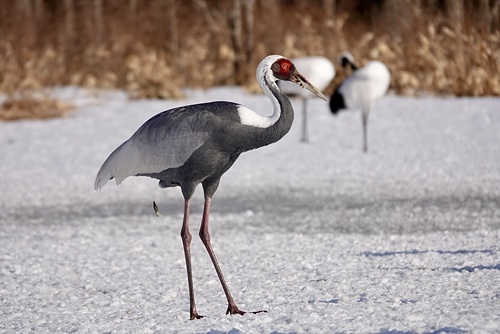
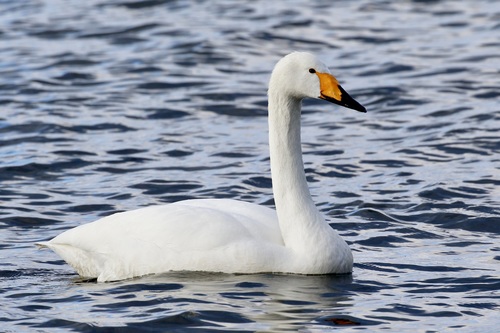
From late autumn to early spring, cranes, swans, geese and sea eagles arrive from their northern breeding grounds. Some of their wintering sites are themselves designated Natural Monuments.
These birds fly in from their southern wintering grounds in spring and raise their young in Japan over the summer. It is the season to hear and see them in forests and mountains.
Places where Genji, Heike and Hime fireflies emerge are designated in many parts of Japan. When watching them, keep lights to a minimum and leave the fireflies and their surroundings undisturbed.
Amami Oshima, Tokunoshima, the northern part of Okinawa Island and Iriomote were inscribed as a World Natural Heritage site in 2021. Many animals here evolved on their own islands and live nowhere else.
The Ogasawara Islands are oceanic islands that have never been joined to a continent. Inscribed as a World Natural Heritage site in 2011, they are home to many birds, insects and land snails found nowhere else.
The rock ptarmigan and many alpine butterflies reached Japan during the ice ages and stayed on the cool high mountains as the climate warmed. Stay on the trail and watch them quietly.
Three cranes are Special Natural Monuments. Look at the body colour and the pattern on the head and neck.
Two look-alike pairs among the large winter birds. For swans, look at the yellow on the bill; for sea eagles, the bill and the white on the shoulders and tail.
The names are similar in Japanese, but the serow belongs to the cattle family and the deer to the deer family. Their horns tell them apart.