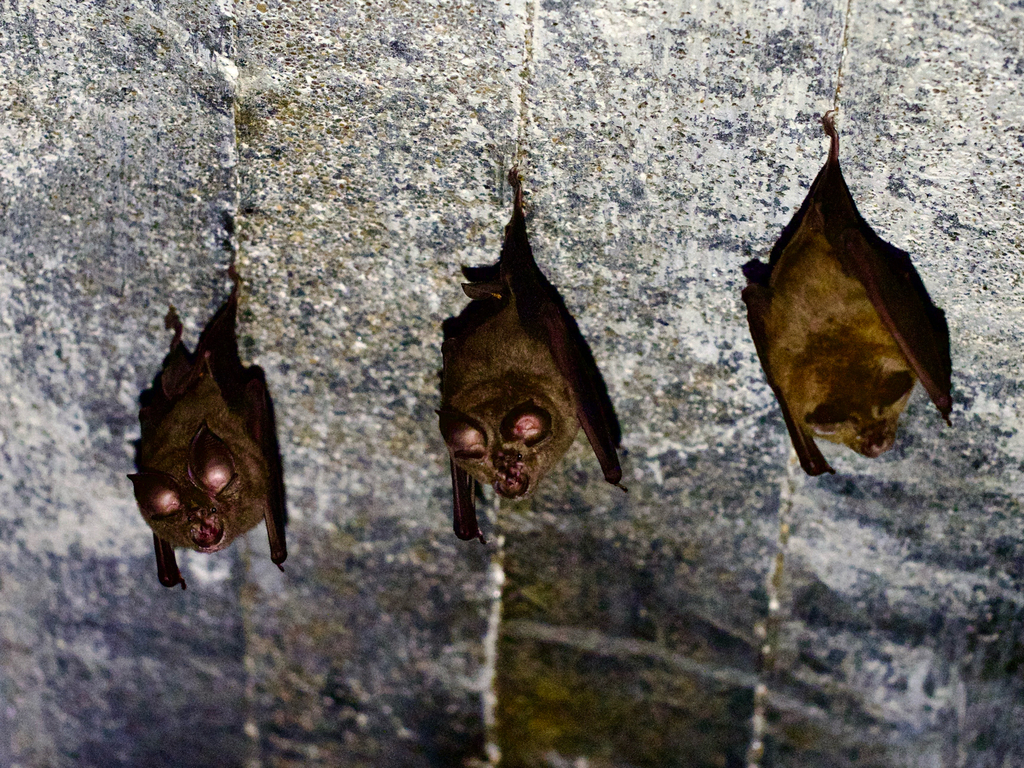
Photo: りなべる / CC BY 4.0 / iNaturalist
Iwaizumi Spring Cave and Its Bats
岩泉湧窟及びコウモリ · Iwaizumiwatsukutsuoyobikoumori
- Designated by
- National / Natural Monument
- Designation type
- Habitat / breeding site
- Designated on
- December 14, 1938
- Location
- 岩手県下閉伊郡岩泉町
- Prefectures
- Iwate
- Scientific name
- Rhinolophus ferrumequinum, Rhinolophus cornutus, Plecotus sacrimontis, Murina hilgendorfi, Myotis macrodactylus
About the Greater Horseshoe Bat
A large bat with a horseshoe-shaped nose-leaf, using caves for daytime roosts and hibernation and hunting insects with ultrasound. Bat caves such as Iwaizumi in Iwate and Saiko in Yamanashi are designated Natural Monuments.
Natural Monuments related to the Greater Horseshoe Bat →About the Little Japanese Horseshoe Bat
A smaller relative of the Greater Horseshoe Bat, with a complex nose-leaf used to emit ultrasound while hunting insects in flight. It hibernates and roosts in caves, and sites like Iwaizumi in Iwate and Saiko in Yamanashi are protected.
Natural Monuments related to the Little Japanese Horseshoe Bat →About the Japanese Long-eared Bat
A medium-sized bat with rabbit-like long ears, roosting in caves and tree hollows and catching insects in flight. Caves such as Iwaizumi in Iwate and Saiko in Yamanashi are protected as Natural Monuments for its habitat.
Natural Monuments related to the Japanese Long-eared Bat →About the Hilgendorf's Tube-nosed Bat
Hilgendorf's Tube-nosed Bat has tube-like nostrils that stick out like a tengu's nose. It lives in tree hollows and caves in forests and eats insects. The Iwaizumi spring cave in Iwate, used by bats, is designated a Natural Monument.
Natural Monuments related to the Hilgendorf's Tube-nosed Bat →About the Japanese Large-footed Myotis
The Japanese Large-footed Myotis is a bat with big hind feet that can skim the water to snatch fish or aquatic insects. It roosts in caves, bridges, and tunnels. The Iwaizumi spring cave in Iwate, which it shares with other bats such as the tube-nosed bat, is a Natural Monument.
Natural Monuments related to the Japanese Large-footed Myotis →Map
Approximate location of the designated site (municipality centre).
Frequently asked questions
The designated site is in 岩手県下閉伊郡岩泉町.
Sign in to record the animals you meet
Sign inCommunity photos
Sign in to post and share photos and comments about the animals you meet.
Comments
No comments yet.


